Effective Holotropic Breathwork For Stress Management
Are you feeling overwhelmed? You're not alone. Although stress is a normal part of life, it may negatively impact our wellbeing if it is not managed. Thankfully, we have a handy, easy-to-use tool to help us fight stress: our breath. Breathwork, the practice of consciously control
Written by
Reviewed by



Dr. Arvind Lokare, Dr. Krishnan Narayana Pisharody, Dr. Rudresh
Integrative Physician · Spine & Pain

Effective Holotropic Breathwork For Stress Management
Reviewed By: Dr. Aditi S. Prabhu, BNYS
Examine the life-changing technique of breathwork as a stress-reduction strategy. Discover the many benefits of regulated breathing for stress relief, improved relaxation, and general well-being. Learn about the advantages, possible drawbacks, and necessary setup for a productive holotropic breathwork session.
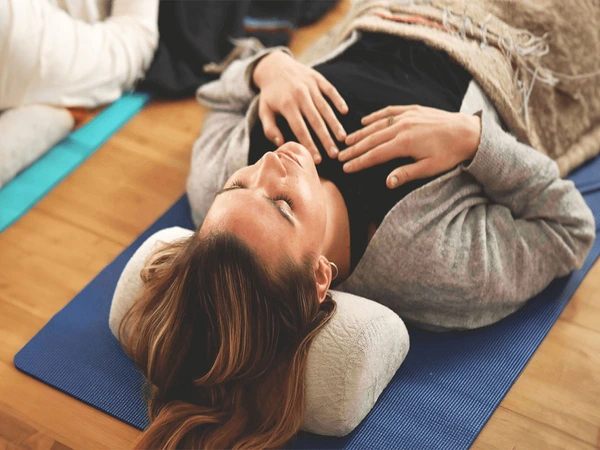
It is a therapy approach that emphasises regulated breathing methods to lower stress, encourage calmness, and improve general health. This post will explain what breathwork is, how it’s done, what to anticipate before, during, and after a session, how it functions, its advantages and any drawbacks, and the steps that should be taken to ensure a good session. In a recent report, in times of stress, worry, fatigue, or sleeplessness, breathwork can also be a useful self-soothing technique, according to Colorado-based psychotherapist Charlotte Mulloy of Freespira, a digital breathwork therapy company.
To become increasingly mindful of the respiration and the impact it has on one’s body and your thoughts, individuals can adopt several breathing techniques. Consumers can regulate stress, strengthen their focus, and attain profound calm by doing these types of things.
How Breath-work is performed?
In a session, individuals usually perform certain breathing exercises under the supervision of a professional clinician. These exercises for breathing, which are designed to ease stress and elicit relaxation, may use methods including deep breathing into the abdomen, rhythmic living and breath with alternate nostrils. Furthermore, practitioners may use awareness or visualization exercises to improve the lesson’s overall quality and efficacy.
Getting Ready for session
It’s best to be properly hydrated, have a light lunch, and let the breathwork practitioner know about any health issues or concerns before starting a session. Establishing a peaceful, distraction-free workplace helps maximize the practice.