Discover the Simple Qigong Benefits for Everyday Wellness
Qigong is the ancient art form of increasing 'Qi' and improving its flow by performing special exercises done with concentration and conscious breathing to maintain health and prevent or reverse diseases.
Written by

WG
Editorial Team
Reviewed By: Dr. Vadivel Dhatchanamoorthy, BNYS
Curious about how slow, intentional movements can help you heal? The ancient practice of Qigong meditation offers powerful benefits—calming the mind, boosting energy, and rebalancing your body’s natural rhythm. It shares roots with Tai Chi and Qigong, both known for their deep healing effects and growing global recognition.
Qigong is more than just movement—it’s a gentle, meditative practice that works with your body’s energy systems. Unlike physical workouts, Qigong meditation combines soft motion and breath to release emotional blocks, reduce anxiety, and promote deep calm. Whether practiced alone or with Tai Chi, it’s known for restoring balance and improving resilience.
At Wellness Garden, we connect you with trained Qigong experts and over 600 trusted mind-body therapists across Bangalore. Qigong benefits are now being embraced as part of holistic wellness plans, helping individuals restore balance and reconnect with their inner energy.
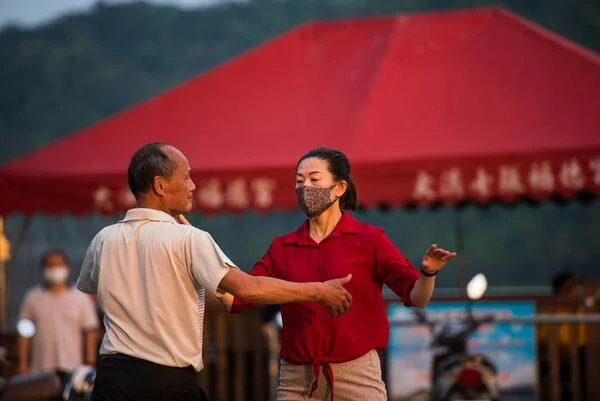
How does Qigong work?
Qigong breaks down the energy blockages and promotes the free flow of energy throughout the body’s meridian system.It incorporates aspects of breathing routines, martial arts methodologies, relaxation training, and concentration with the goal of cultivating energy as well as transferring it to all body organs. Qi, often known as breathing or life force, is the vitality that goes into the tissues of our bodies. It does not circulate in unpleasant settings.
Qigong is the capacity to cultivate and maintain the body’s inherent qi flow, explains Christopher Apodaca. One of the primary advantages of martial arts, noted Apodaca in a recent article, is to relax the nervous system and the spinal column. He says that stress sets off the central nervous system’s “fight-or-flight” reaction, which helps us get through stressful situations.
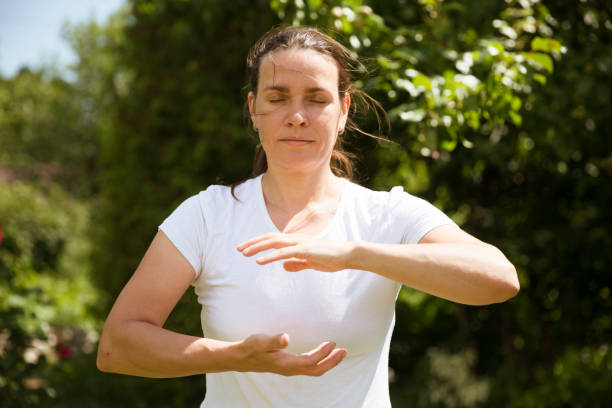
Regularly practicing Qigong will help you replenish your body’s energy on a deeper level, overcome any chronic physical or emotional issues, and dramatically improve your quality of life in a non-invasive way. Qigong meaning are designed to help you preserve your essence (Jing), strengthen and balance the flow of energy (Qi), and enlighten your spirit (Shen).
Qigong movement and postures are shaped by the principle of Yin and Yang: the complementary interrelationship of qualities such as fast and slow, hard and soft, excess or deficiency, and external and internal. Qigong exercises use these contrasting and complementary qualities to restore harmony to the essential substances, organ systems, and channels. It is a practice of building awareness.
Basic Qigong Techniques
Some of the basic techniques that make up the foundation of Qigong are:
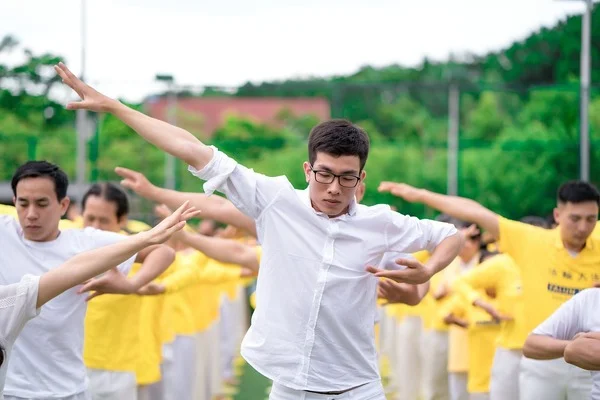
- Concentration: Concentration leads to and results from Qi energy awareness, breathing techniques, and Qigong exercises. It is a process of focusing on and letting go at the same time. Through deep relaxation and expanding your consciousness, you will be able to create a frame of mind that is large enough to encompass your entire mind, body, and spirit’s functions, yet focused enough to allow outside distractions, worries, and everyday hassles to drift away.
- Breathing: Breathing techniques are a way of stimulating the Qi energy. There are two types of Qigong breathing exercises evolved:
Buddha’s Breath and Daoist’s Breath. Both methods infuse the body with Qi and help focus meditation. - Buddha’s Breath – When you inhale, extend your abdomen, filling it with air. When you exhale, contract your abdomen, expelling the air from the bottom of your lungs first and then pushing it up and out until your abdomen and chest are deflated. As you breathe in and out, imagine inviting your Qi energy to flow through the Channels.
- Daoist’s Breath – The pattern is the opposite of Buddha’s breath. When you breathe in, you contract your abdominal muscles. When you exhale, you relax the torso and lungs.